


Blog – Timber Frame Houses
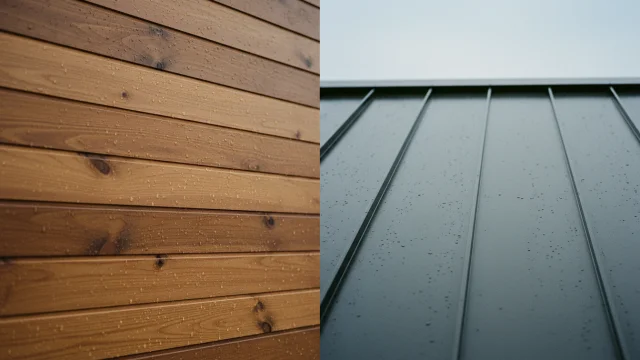
Timber frame house maintenance – facts and myths about the facade and roof
A facade protected industrially during prefabrication keeps its look for 5–8 years without maintenance, and coated steel carries manufacturer warranties of 30–50 years against perforation. Washing the facade once every 1–2 years is worthwhile.
Maintenance of a wooden house is a topic surrounded by legends, arousing unjustified fear in many investors dreaming of a "Modern Barn". Most concerns stem from outdated knowledge from the 90s, when impregnations created a peeling crust, and caring for the facade meant spending your vacation on a ladder with a brush in hand.
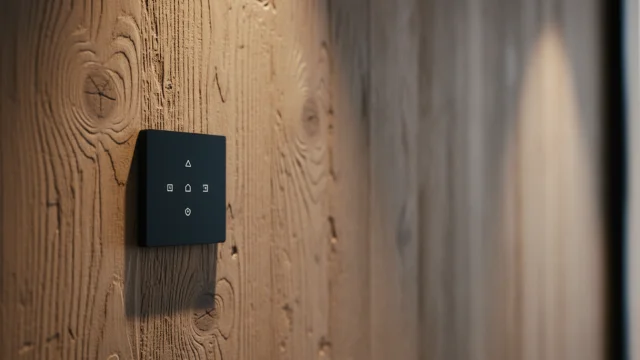
Smart Home and Automation in Skeleton Construction – Why Is It Worth It?
The cost of a basic smart installation (heating, lights, blinds, alarm) in modular construction is often just 3-5% of the investment value. According to the article, the payback period is usually 5-7 years.
Imagine a home that thinks faster than you decide to get out of bed. Skeleton construction and modern automation are not two separate worlds – they are pieces of the same puzzle aimed at your comfort and financial security. In this article, I will prove why a timber frame house is technology's best friend and how a smart home becomes an investment with the highest rate of return.
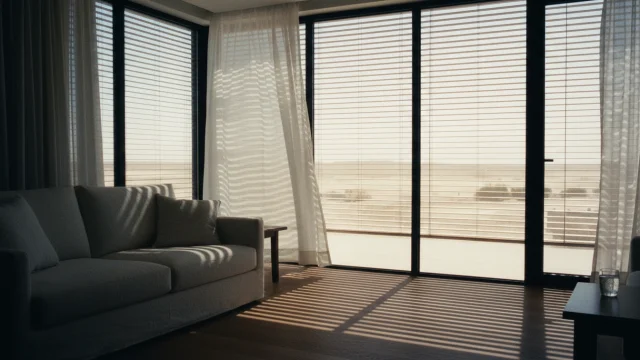
Thermal comfort in summer. Is a timber frame house hot? - Analysis
In a low-accumulation house the air temperature can jump to 30°C in summer within a short time, and standard glazing packages have a g value of 50–55%. Comfort comes from external roller shutters and blinds plus air conditioning, which cools a living room in about 15 minutes.
Is a timber frame house hot? I hear this question at almost every meeting with investors, right after issues related to acoustics and structural strength. There is a myth in the industry that in summer, a lightweight structure turns into a sauna, and users are doomed to the constant hum of air conditioning.
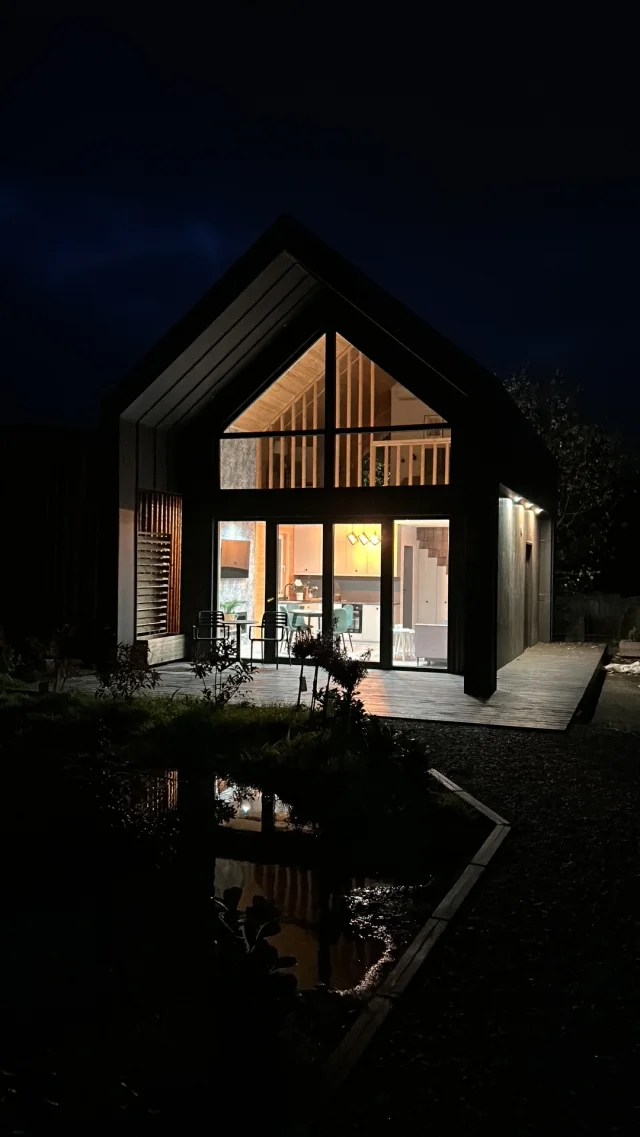
Ekodom 50 vs Ekodom 110 – Overview of popular family models
Deciding to build a house involves more than just choosing the facade color or roof shape. It is primarily a mathematical game concerning your future comfort and wallet, weighing a small single-story house against an expansive design with an attic. You face a dilemma: choose the compact, economical "fifty" or invest in space for a large family with the model 110? In this article, we will break down two bestsellers – Ekodom 50 and Ekodom 110 – analyzing their "insides," costs, and real-world utility, so you can stop guessing and make a decision based on hard data.
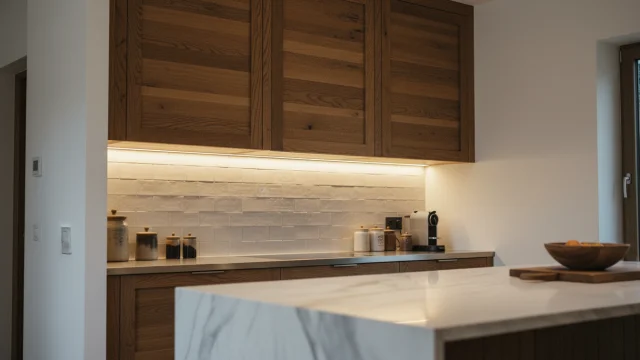
How to hang kitchen cabinets and a TV on a timber frame wall? Technical guide
A timber-frame wall (12.5 mm plasterboard and 12–15 mm OSB) safely carries light items up to 10 kg per point and heavier decorations up to 15–20 kg per point, while cabinets and a TV need reinforcements and anchors with a suitable grip range (e.g., 20–30 mm). In 99% of the cases described, the wrong fastener failed, not the board.
This is probably the most common fear preventing investors from choosing modern construction technologies. Hanging cabinets on plasterboard or mounting a heavy TV in a timber frame house has grown into a myth where walls are made of paper, and every attempt to drive a nail ends in a construction disaster. This is nonsense. Physics is the same for concrete and wood; only the anchoring technology changes. If you understand how the load-bearing capacity of a timber frame wall works, you will be able to hang even a home gym on it, and your kitchen cabinets will hang more stably than in an old brick building.
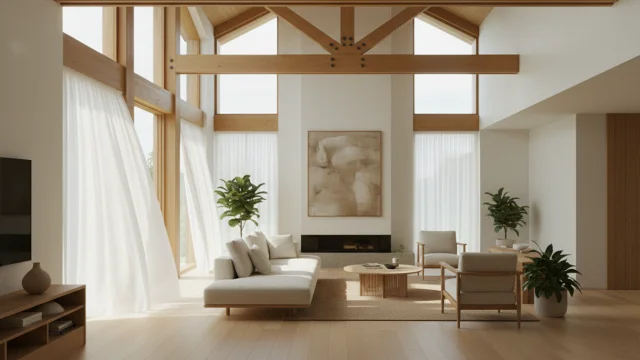
Ventilation and Heat Recovery in Timber Frame Houses – Why "Natural Gravity" is Not Enough
Natural ventilation generates up to 40-50% of total heat loss in a modern, well-insulated building. Heat recovery returns up to 90% of this heat and keeps humidity at an optimal 40-60%.
Building a modern home involves making hundreds of decisions. Most are reversible, but one is absolutely crucial: choosing how your house will "breathe". If you still believe that opening a window or installing a vent in the chimney is enough to ensure a healthy climate, we must correct you: in modern construction, natural gravity ventilation is dead. Understanding building physics is the foundation of your investment's safety and your family's health. Today's energy standards force us to build houses as airtight as a thermos. This makes traditional ventilation methods not only ineffective but dangerous, leading directly to structural rot. In this article, we will break down the topic of ventilation, prove why mechanical systems are the only logical choice, and show you how to eliminate moisture risks once and for all.
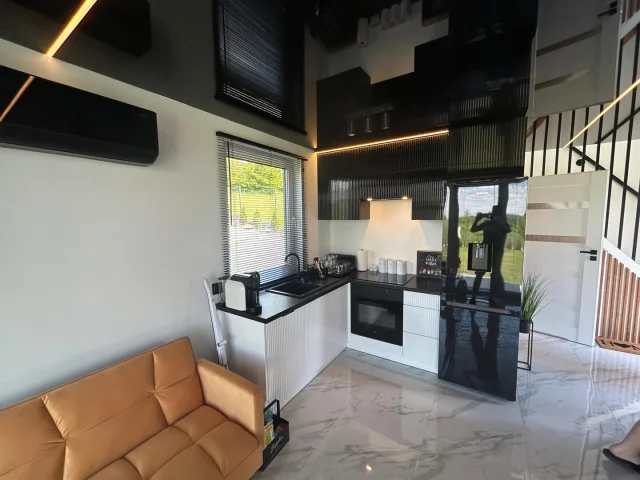
A ready turnkey house in 3 months – what exactly is included in the developer's standard and turnkey finish?
For a turnkey house delivered in 3 months, the author recommends adding a safety buffer of 10-15% of the contract value for unforeseen expenses or changes in decisions, such as a different type of flooring or extra lighting points.
Deadlines in construction are a broad topic. For one contractor, a "turnkey" house means it's ready for furniture, while for another, it means bare walls painted white but without floors. At System-S, we prioritize full transparency. When we say a "ready house," we mean a specific scope of work detailed in the contract. Learn the differences between our standards and see why a "turnkey" package in 3 months is a realistic promise.
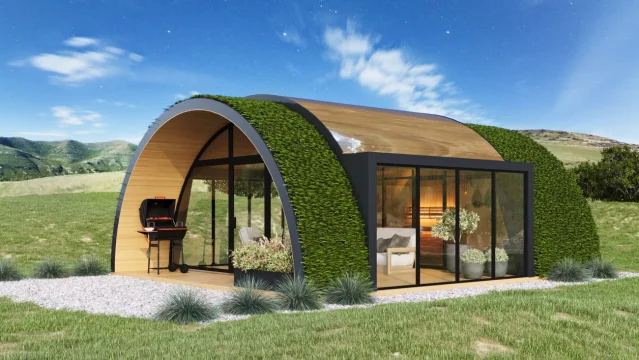
Modular homes and ecology – is prefabrication actually "eco"?
System-S wood is chamber-dried to a humidity of 15% (+/- 3%), which according to the article guarantees biological stability of the structure in prefabricated modular houses.
The word "ecology" is conjugated in all forms today, often being just a marketing gimmick (greenwashing). However, in the case of modular construction, environmental benefits are measurable and proven. If the fate of the planet is not indifferent to you (or you simply want to pay less for energy), check why a factory-made house is greener than one from a traditional construction site.
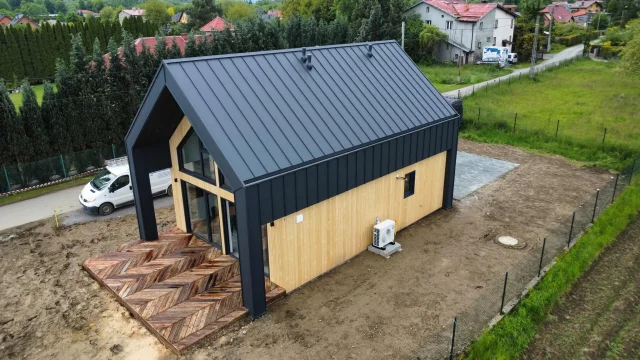
Facades in modular homes – wood, metal, or plaster? What to choose?
According to the article, oiled wood facades must be re-oiled on average every 2-3 years. Cheap pine or spruce needing painting every 3 years proves more expensive over two decades than maintenance-free metal or charred board.
A modular home is synonymous with modernity. Noble minimalism reigns here. The facade is your home's calling card, but it must also withstand the rigors of transport and changing weather conditions. At System-S, we focus on materials that "work" together with the structure. Standing seam metal, natural wood, or modern panels? Check what to choose so you won't regret it years later.
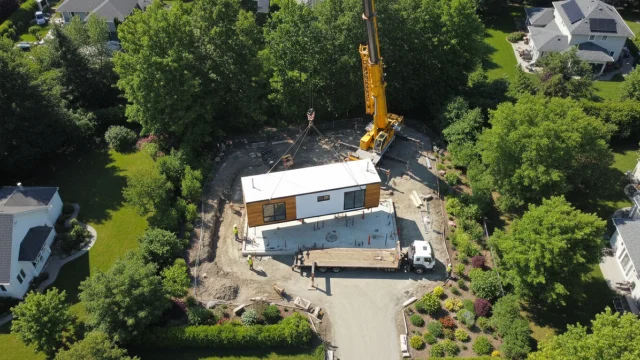
Transporting a modular house – is my plot suitable?
The decision to buy a modular house has been made, the project has been chosen, the financing is ready. And then a cold shiver runs down your spine: "How are they going to get it here?". Transporting a finished house that weighs several tons and has the dimensions of a decent-sized studio apartment is a logistical operation that requires a plan. At System-S, we take this burden off your shoulders, but you need to know if your plot is ready to receive a "large load". Here is a checklist that will dispel your doubts.