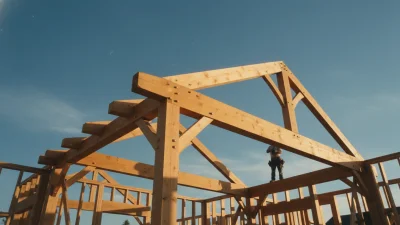


Specifics of building a house in mountainous and sloping areas – foundations vs. lightweight frame

Why a heavy masonry house on a sloping plot is a huge financial problem
The decision to build a heavy, masonry building on a slope is like trying to place a grand piano on the edge of the stairs. Every square meter of the foundation requires deep excavation, and the mass of the structure forces the use of massive reinforcements and complex drainage systems to prevent the building from simply "flowing" away with the rain. Earthworks, which are routine on flat terrain, turn into a logistical operation in the mountains, requiring the removal of hundreds of tons of earth and securing slopes against landslides.
A real-life example is a situation where the costs of founding a traditional house on a sloping plot exceed the cost of foundations on flat terrain by 40–60%. Remember that every centimeter dug upwards is not only the cost of concrete but also the risk of hitting rock, groundwater, or unstable soils. That's why so many people opt for timber-frame houses in the Silesian Voivodeship, as this is an area that requires clever solutions.
| Aspect | Masonry house on a slope | Timber-frame house on a slope |
|---|---|---|
| Earthwork Costs | Very high (excavations, retaining walls) | Minimal (point foundation/piles) |
| Logistics | Requires heavy equipment (difficult access) | Light equipment, fast transport |
| Ground Load | Very high (risk of settlement) | Low (lightweight construction) |
The alternative is to change the way you think about weight. Instead of fighting the terrain with concrete, we work with its specifics. Instead of building on a "flat" surface, we use solutions that adapt to the slope, reducing the need to destroy the natural landscape.
Advantages of a lightweight frame on micropiles
A lightweight timber-frame construction is a lifesaver in the mountains. Thanks to its low mass, we don't have to pour hectoliters of concrete under the entire structure. Micropiles allow the building to be "suspended" above the ground, which is not only aesthetic but, above all, geotechnically safe. This solution transfers the load to deeper, more stable soil layers, bypassing the often unstable humus layer on the slope.
The key advantages of this approach are:
- Speed of implementation: A foundation on micropiles takes days, not weeks of pouring concrete.
- Nature conservation: You don't have to remove the entire slope of the plot – the intervention in the terrain is localized.
- Vibration resistance: Wood, as a flexible material, handles potential micro-movements of the subsoil better than rigid brick.
It's also worth noting the logistics – smaller equipment needed for pile installation means lower access costs to hard-to-reach, narrow mountain roads. This is a real saving that investors often overlook in their initial calculations. Read about the challenges we faced during the construction of a timber-frame house in Cięcina.
Why building houses in the Beskids is not a challenge for amateurs
The local market in the Beskids, especially the construction of houses in Żywiec and the surrounding areas, has its own rules. Strong Foehn winds, specific winter conditions, and soil variability mean that the standard "copy-paste" approach from the lowlands won't work here. You need to be sure that the contractor understands how to anchor a lightweight frame so that the wind doesn't treat it like a sail.
An expert approach involves:
- A thorough geotechnical survey even before purchasing the plot.
- The use of high-strength timber connectors.
- Designing the building's shape to utilize natural windbreaks.
Ultimately, a house on a steep plot can be your best investment decision, provided you stop treating the terrain as an enemy to be leveled and start treating it as the foundation of your success. Choosing a timber frame is not a compromise – it's a conscious strategy for building where others can't.